|
|
|
|
|
|
|
 |
|
September 17, 2026
By Catherine McGregor |
 |
|
|
|
|
|
Mōrena, and welcome to The Bulletin
In today’s edition: Poll reveals rising tolerance for political violence; Lifting the lid on a mysterious MLM that thrives in secrecy. But first, business owners and their customers say central Auckland feels increasingly unsafe and uninviting – and are arguing that coordinated action is needed now.
|
|
|
|
 |
|
Te Komititanga square, downtown Auckland. (Photo: Hannah Peters/Getty Images) |
Aucklanders voice their anger over the state of CBD
Two recent surveys – one formal, one very much not – have laid bare the depth of frustration over antisocial behaviour in Auckland’s city centre. The business group Heart of the City (HOTC) surveyed 102 operators in and around Queen Street and found 91% thought rough sleeping and begging were harming their trade, while 81% believed the CBD was unfit to attract new people and investment. A companion poll on the Herald’s website, though opt-in and therefore highly unscientific, drew more than 6100 responses, 97% of whom agreed the central city had become “uninviting” and “beset by anti-social behaviour”.
Business owners described daily scenes of drug use, street fights and even public sex. “It’s very intimidating for normal people,” said cafe owner Paul Ewing, adding security come to his premises “three, four, five times a day”. One office executive told the Herald’s Tom Dillane staff had been assaulted in broad daylight, while a suburban foodie said she and her husband no longer frequent CBD restaurants in part due to once-lively dining streets now reeking of vomit and excrement.
Measures in motion but patience wearing thin
A number of safety measures are already in place, including a reinstated 24-hour police base on Federal Street, Auckland Council compliance wardens, and HOTC’s own round-the-clock security patrols. In March, the government also allocated $1.3 million from its Proceeds of Crime Fund to install lighting, CCTV and more patrols across central Auckland, including the CBD.
HOTC chief executive Viv Beck says her group’s long-standing call for a coordinated response is finally being heard, with ministers agreeing a cross-agency approach is needed. But, she adds, “we’re stressing the urgency” for visible progress before the City Rail Link and new convention centre open in 2026. She tells The Post’s Amelia Wade (paywalled) HOTC wants immediate enforcement of bylaws and a “crackdown on drugs” so visitors and locals feel safe again. “What we’d really like to see is people in need get the help they need – and businesses have a really good environment to trade in.”
Tightened housing rules fuel a wider crisis
While more police and security might curb some antisocial behaviour, those working with homeless Aucklanders say the problem’s roots lie in government policy. As RNZ’s Lauren Crimp reports, rule changes introduced in August 2024 made it far harder to enter or remain in emergency housing, requiring extensive proof of eligibility and allowing officials to decline people deemed to have “caused or contributed” to their homelessness.
Both applications and approvals have since plummeted, with more applications now being declined than granted in Auckland. In early September, ministers instructed officials to use more discretion in applying the rules – but stopped short of officially relaxing them. Housing advocates say the impact has already been devastating: the number of people living without shelter in Auckland has almost doubled this year and more than 500 nationwide are now sleeping in cars, according to a report in The Post last month. “They’ve just shut the door and left some of our most vulnerable people out in the cold,” youth worker Aaron Hendry told the Herald’s Julia Gabel (paywalled). The government insists its “tighter gateway” restores personal responsibility, but critics argue it has simply shifted the problem onto city streets.
More long-term social housing needed
Experts say the answer to Auckland’s worsening street crisis lies not in tougher policing but in proven, long-term housing strategies. In an op-ed for The Post (paywalled), Rami Alrudaini of Housing First Auckland argues the situation in Auckland “isn’t a failure of enforcement. It’s a failure to implement what works.” The Housing First model provides people experiencing chronic homelessness with permanent housing first, then wraps intensive support around them, from addiction services and mental health care to employment assistance. Alrudaini says local data shows about 90% of participants remain housed after six months.
Following mounting pressure, the government has announced 300 new social homes through the Housing First programme and extra funding for rough-sleeper services. But Labour housing spokesperson Kieran McAnulty says the move “won’t even touch the sides” of the crisis, and Auckland City Mission points out that only those who have been homeless for at least a year qualify for Housing First support, leaving many rough sleepers out in the cold – quite literally.
|
|
|
|
|
|
|
 |
|
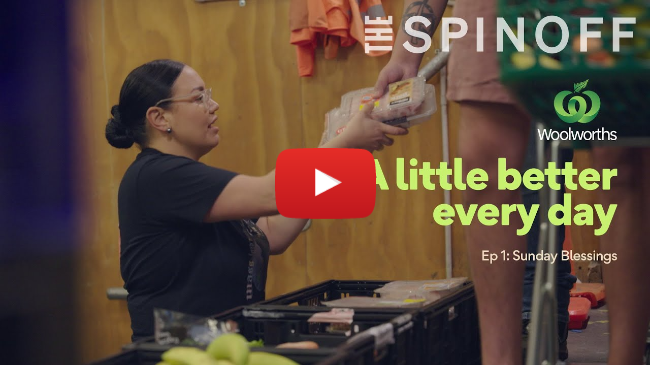
A little better every day
“When I see our elders on the streets, it makes me want to cry,” says Danielle LeGallais. She’s two papers away from her business degree, a practicing lawyer and mum to two boys. “I’ve been homeless many, many times,” she says.
Danielle co-founded Sunday Blessings in 2018. Since then, her team has served over 200,000 meals to hungry people and helped divert tonnes of food from landfill with help from food rescue partners like Woolworths. In an increasingly disrupted world, people like Danielle are working to make Aotearoa a little better every day. This series shines a light on them. This content was made in partnership with Woolworths NZ.
|
| Watch EP01: Sunday Blessings here |
|
|
|
|
|
|
Lifting the lid on a mysterious MLM that thrives in secrecy
Your friend from high school is being weird on Instagram. They were never big on posting but now their page is littered with diamond emojis, claims about investing in themselves and manifestations of financial freedom.
They pose with mentors you didn’t know they had, wearing suits you’ve never seen them in before, talking about a side hustle they will not name.
You see group photos of them at a business conference in Melbourne, with a receipt-length caption about “becoming free from the 9-5 grind”, so you click on the tagged accounts.
All of them have words like “legacy”, “entrepreneur” and “freedom” in their bios. They all attend the same events, parrot the same inspirational quotes and post the same perfectly edited reels.
What’s going on?
Behind diamond emojis, business conferences and the quest for "financial freedom" lies a multi-level-marketing scheme shrouded in secrecy. In a major feature for The Spinoff this morning, Janhavi Gosavi speaks to former members of the Legacy programme in Wellington who were drawn in by promises of "retire by 30".
|
| Inside Legacy: the MLM that thrives in secrecy |
|
Poll reveals rising tolerance for political violence
A new Taxpayers’ Union-Curia poll has revealed worrying anti-democratic attitudes among New Zealanders, with 14% – one in seven – agreeing that violence may be needed to “get the country back on track", The Post reports (paywalled). Support was strongest among Te Pāti Māori and Act supporters (26% and 20% respectively), and highest among 18- to 39-year-olds, one in five of whom endorsed the idea. Men were nearly twice as likely as women to agree. The same poll found a majority backing for deporting all illegal immigrants (53%), with support strongest among NZ First and Act voters. Taxpayers’ Union head Jordan Williams called the results “a massive red flag for the health of our democracy". “It’s alarming that so many New Zealanders think violence might be justified to ‘fix’ the country. This isn’t a fringe issue any more,” he said. |
|
|
|
|
|
|
|
 |
Click and Collect
|
|
|
|
|
|
|
|
Normally the media hire journalists to report the news, but we've hired a comedian? What’s going on? Robbie will explain all.
Join us in Auckland for an intimate conversation between comedian, writer, and host Robbie Nicol, and The Spinoff’s head of audience Anna Rawhiti-Connell. Robbie writes and presents The Spinoff’s new explainer video series ‘Now You Know’, designed to deliver reliable, regular and relevant news content to young New Zealanders.
Wednesday 22 October,
7pm @ The Spinoff HQ
Morningside, Auckland |
| Grab your tickets |
|
|
|
|
|
|
|
Thanks for reading.
If you've enjoyed our roundup of today's news, forward The Bulletin to a friend.
As always, thanks to our members. If you are not already a Spinoff member, please sign up today to support independent journalism. |
|
|
|
|
|
 |
|
A wrap of our stories each weekday
– |
|
|
|
 |
|
The best of The Spinoff each Saturday
– |
|
|
|
 |
|
Essential reading for all things Wellington
– |
|
|
 |
|
Culture, entertainment & recommendations
– |
|
|
|
|
|